Skip to product information
1 of 5

MyHealthspan

Epigenetic Age DNA Methylation Test

Epigenetic Age DNA Methylation Test

Regular price $199.00
Regular price Sale price $199.00
Sale Sold out
Quantity
Epigenetic Age DNA Test — MyHealthspan

Find out how old your cells actually are — and whether your lifestyle is slowing or accelerating your biological clock at the molecular level. $199 CAD.

How It Works

1
Order online Complete your purchase and your at-home nasal swab collection kit ships directly to your door within a few business days.
2
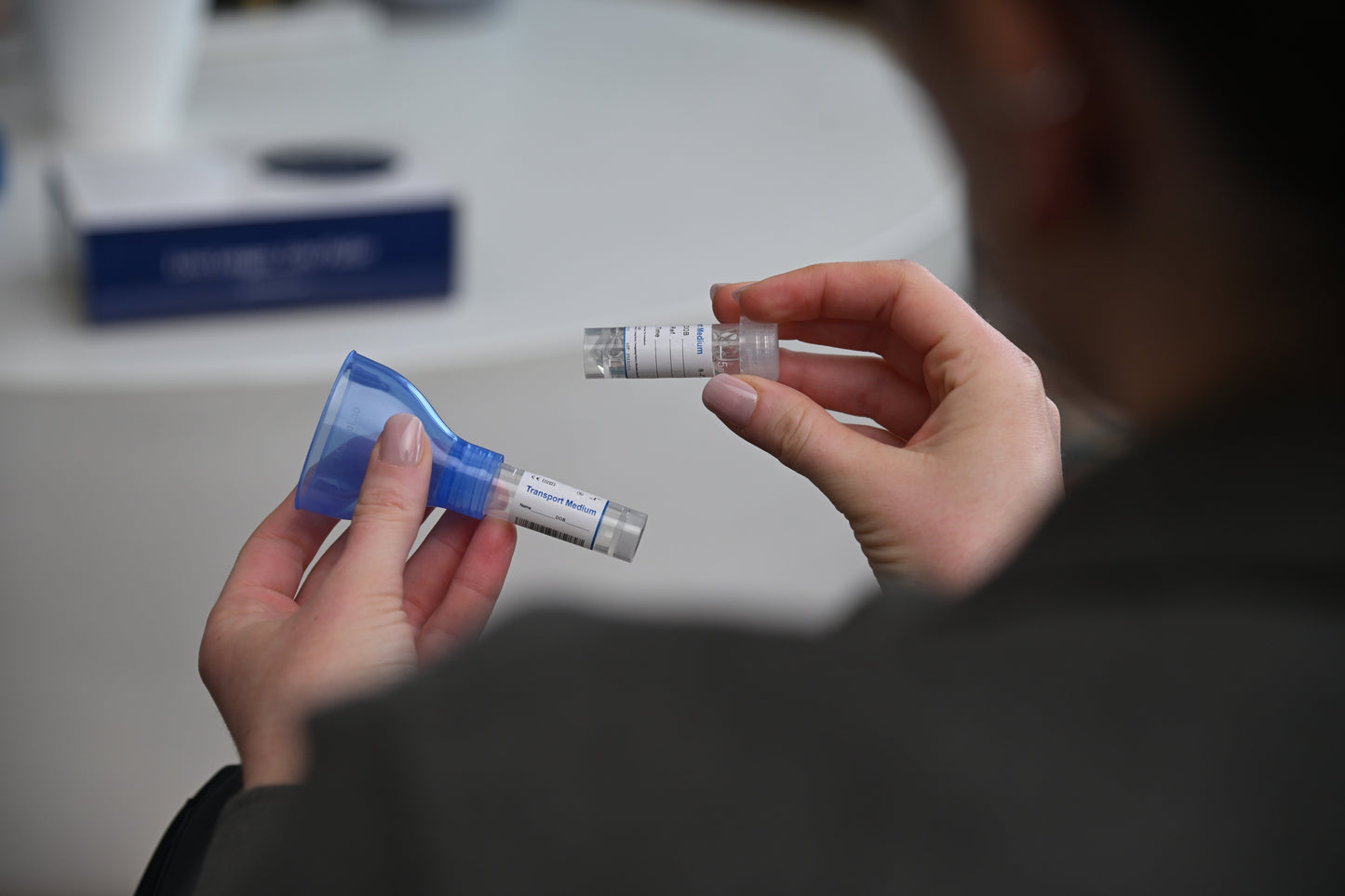
Receive your kit and provide your sample Follow the clear step-by-step instructions to collect your nasal swab sample. The process takes under five minutes and requires no clinic visit.
3
Mail your sample back for advanced triplicate analysis Use the prepaid return envelope included in your kit. Your sample undergoes advanced triplicate DNA methylation analysis at our certified laboratory for the highest accuracy.
4
Receive your biological age report in 2 to 4 weeks Your results appear in the MyHealthspan app with a full biological age report, a comparison to your chronological age, and an actionable lifestyle protocol.

What You'll Learn

  • Your biological age versus your chronological age, calculated from DNA methylation patterns across your genome
  • Whether you are aging faster or slower than average for your age group, and by how much
  • Which lifestyle factors are most likely driving your biological age in the wrong direction, based on your epigenetic profile
  • Specific evidence-based interventions to slow or reverse biological aging, tailored to your result

What's Included

  • At-home nasal swab collection kit, shipped to your door
  • Advanced triplicate DNA methylation analysis for maximum measurement accuracy
  • Comprehensive biological age report with age-group comparison
  • Results delivered in the MyHealthspan app
  • Actionable lifestyle protocol based on your biological age findings

Who This Test Is For

This test is for someone who wants to know whether their health habits are actually working at the cellular level. They may exercise regularly, eat well, prioritize sleep, and take supplements — but have no objective way to know whether any of it is meaningfully slowing their rate of aging. This test gives them a measurable, cellular-level answer. It is also frequently chosen by people who want to establish a precise baseline and retest in 12 to 18 months to track the impact of changes they have made. Ideal for health-conscious individuals between 35 and 65 who are serious about longevity and want more than subjective feedback about how well they are aging.

What We Analyze

This test measures DNA methylation patterns across thousands of sites in your genome. DNA methylation is an epigenetic modification — a chemical tag on DNA that does not change your genetic sequence but does regulate how genes are expressed. Methylation patterns shift in highly predictable ways as the body ages, and these shifts have been mapped against chronological age to produce validated biological age "clocks." The most well-validated of these, including the Horvath, Hannum, and PhenoAge clocks, can predict biological age with remarkable accuracy and have been shown to predict health outcomes including all-cause mortality, chronic disease risk, and functional decline more accurately than chronological age alone.

Our analysis uses a triplicate methodology, meaning your sample is analyzed three times independently and results are averaged, providing a more accurate and reproducible biological age estimate than standard single-run testing.

🩺 Doctor-founded by Dr. Zia Poonja, practicing oncologist. Every protocol is clinically designed.
🔒 PHIPA + PIPEDA compliant. Your health data stays in Canada, encrypted and private.
💳 HSA/FSA eligible. Use your health spending account.
5-star rated on Trustpilot. Trusted by thousands of Canadians.
"I have used other executive health type programs in the past, but this organization provides a unique approach to overall health and provides far more valuable and useful feedback at a very reasonable cost."
Scott M., MyHealthspan member

Frequently Asked Questions

What is DNA methylation and why does it measure aging?+
DNA methylation is a process where small chemical groups called methyl groups attach to specific sites on your DNA. These tags regulate which genes are switched on or off and accumulate in highly predictable patterns as the body ages. Researchers have mapped these patterns across large populations and built mathematical models — called epigenetic clocks — that can predict a person's chronological age from their methylation data with striking accuracy. Crucially, the rate at which methylation patterns shift is influenced by lifestyle factors including sleep, diet, exercise, smoking, alcohol, stress, and environmental exposures. This means that your biological age as measured by methylation reflects how you have actually lived, not just how long you have been alive.
How accurate is biological age testing?+
Leading epigenetic clocks have been validated in peer-reviewed research and can estimate chronological age from DNA methylation data to within a margin of approximately 2 to 4 years. Our triplicate analysis method reduces measurement noise further by averaging three independent runs of your sample. It is worth noting that biological age is not a single absolute number — it is a model-based estimate that is most useful as a relative benchmark, particularly for tracking changes over time. The gap between your biological and chronological age, and the direction of that gap, is what carries the most meaningful information.
My chronological age is 42 and my biological age is 48. Should I be worried?+
A biological age that is several years above your chronological age is a signal worth taking seriously, but it is not a cause for alarm. It means that your current lifestyle, stress load, sleep quality, or other factors may be accelerating cellular aging faster than average. The important thing is that epigenetic aging is modifiable. Research shows that meaningful improvements in biological age are achievable through consistent changes to sleep, exercise intensity and volume, diet quality, stress management, and targeted supplementation. Your actionable protocol will be built around the interventions with the strongest evidence base for your specific profile. Many members retest in 12 to 18 months and see their biological age decrease.
Can I reduce my biological age?+
Yes. Multiple peer-reviewed studies have demonstrated measurable reductions in biological age following sustained lifestyle interventions. The interventions with the strongest evidence include high-quality sleep (7 to 9 hours with good sleep architecture), regular aerobic and resistance exercise, a diet high in polyphenols, fiber, and omega-3 fatty acids, stress reduction practices, and minimizing alcohol and ultra-processed foods. The effect sizes are meaningful — some interventions have been associated with reductions in biological age of 2 to 4 years over a period of 8 weeks in clinical settings. Your actionable protocol will prioritize the highest-impact interventions based on your specific result.
How often should I retest?+
Most longevity-focused individuals retest every 12 to 18 months. This timeframe gives enough time for meaningful lifestyle interventions to produce detectable epigenetic changes, while still being frequent enough to course-correct before too much time passes. Retesting more frequently than 6 months is generally not recommended, as the signal-to-noise ratio is lower over short intervals. Many MyHealthspan members use this test as an annual longevity benchmark, combining it with blood biomarker tracking to build a comprehensive picture of how their healthspan is progressing over time.

Already a MyHealthspan member? Check your membership tier — this test may already be included. View membership options →

View full details